Yes, it is pretty to see, but for me, light has a much deeper meaning. Light…is a language, just as music is a language.
-Loie Fuller
The use of projections in dance spans the past 140 years from the magic lantern to interactive mapping and digital avatars! Reif Dance’s Life is an Open Book will be the first time we’ve used so much projection in a dance production at the Reif Center!
Magic Lantern Era – 1890-1910
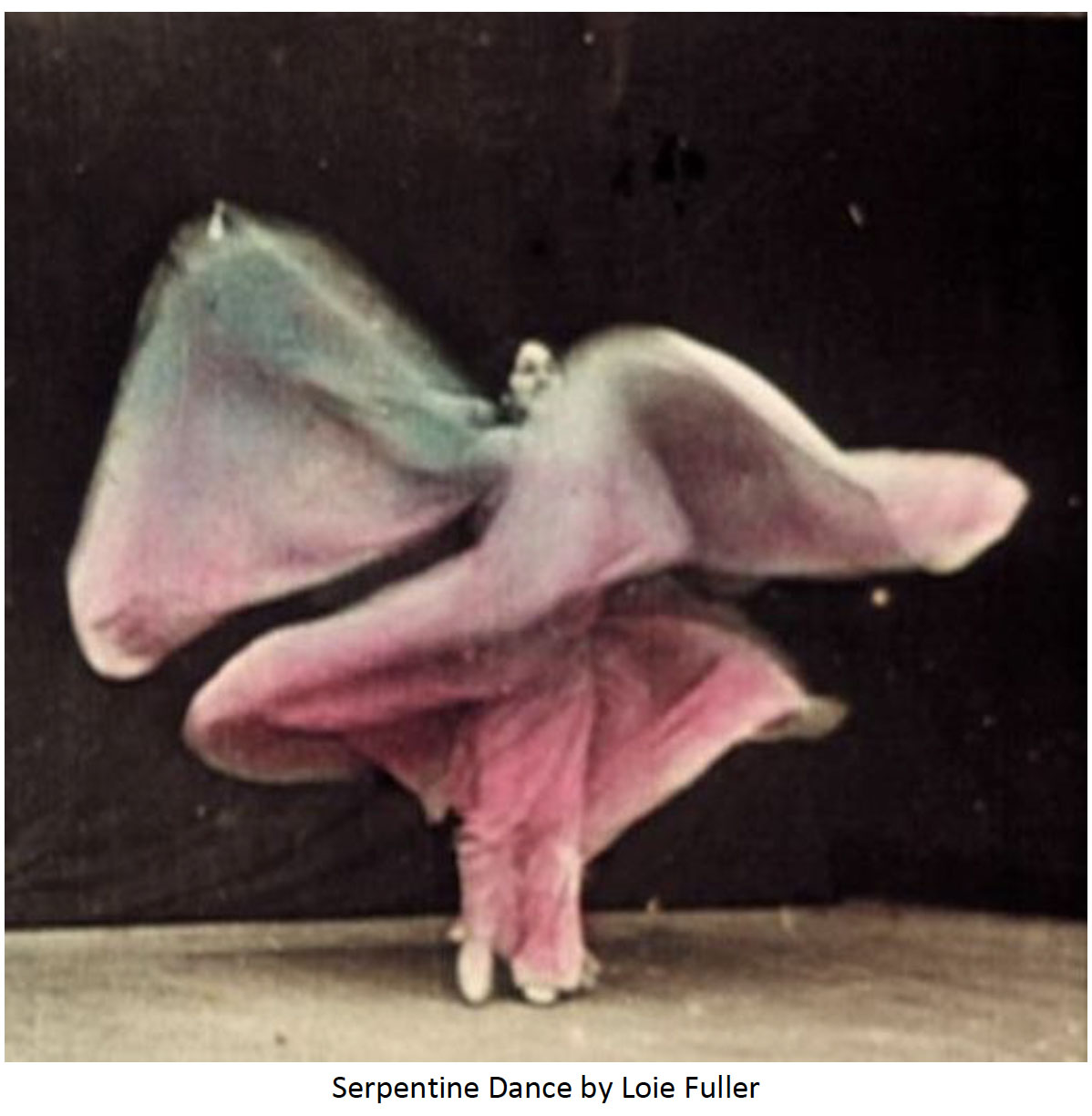
Loie Fuller (1862-1928) was a dance pioneer that experimented with light and color. In 1891, she created the “Serpentine Dance” that combined billowing silk costumes with revolving lamps with different colored gels.
Multi-Media Choreography – 1960-1975
Beginning in the 1960’s, a generation of choreographers such as Elaine Summers and Robert Joffrey experimented with the integration of dance with film, lighting, and electronic music. Summers’ Fantastic Gardens (1964) featured an immersive experience that included large-scale use of multimedia and audience members with hand-held mirrors.
The Digital Era – 1995 to Present
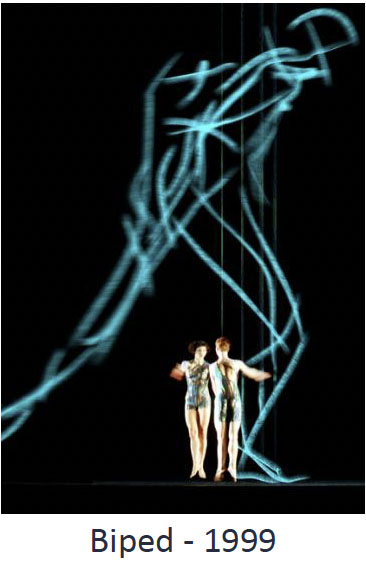
The digital explosion in the 1990’s was soon incorporated into dance. Merce Cunningham introduced Life Forms software to choreograph movement on computers, culminating in his seminal 1999 work, Biped.
Presently choreographers can make use of sensors and software for Interactive Dance Mapping that allows the projected media to respond to the dancer’s movements. Sensors placed on dancers can also control digital avatars projected behind them allowing a solo dancer to have a duet with themselves!
Life is an Open Book – 2012
If you’ve been coming to Reif Dance productions for a while you may recognize this title. Reif Dance originally created this production in 2012 under then dance director Katie Smith. Life is an Open Book features a young girl growing from childhood to adulthood among her favorite books.
Katie explains why it was time to revisit the production.
“As a little girl growing up in Grand Rapids, there was no place I loved to go more than the old Carnegie Library. I spent countless days exploring the world through its books. These memories from my childhood inspired me to write this story. We first produced Life is an Open Book in 2012, and as we were thinking about what to do for this year’s spring production, it seemed only too fitting to bring this story to life again. Our new beloved Grand Rapids Area Library has lost so much this year, which is truly a loss for all of us. In this age of technology and instant information, the simple joy of holding a book is forgotten too easily. I hope this story will inspire you to visit the library, thank them for the gift they are to our region, and pick up a book.”
Updating the Design – 2026
There have been many changes at the Reif Center since 2012, and when it came time to think about the set design, I was immediately drawn to the idea of making extensive use of projections. There are over 25 different books being presented, so creating physical set pieces that would enhance each dance would be a monumental task! We’ve used projections in our Theater Arts productions such as Frozen, Newsies and Wizard of OZ, but we haven’t used projections as much in our Reif Dance productions. The first I recall was two years ago for Thumbelina, and that was just in a few scenes. This is the first dance production since the renovation in 2016 that we haven’t ordered any backdrops!
Projection Designer – Kevin McCoy
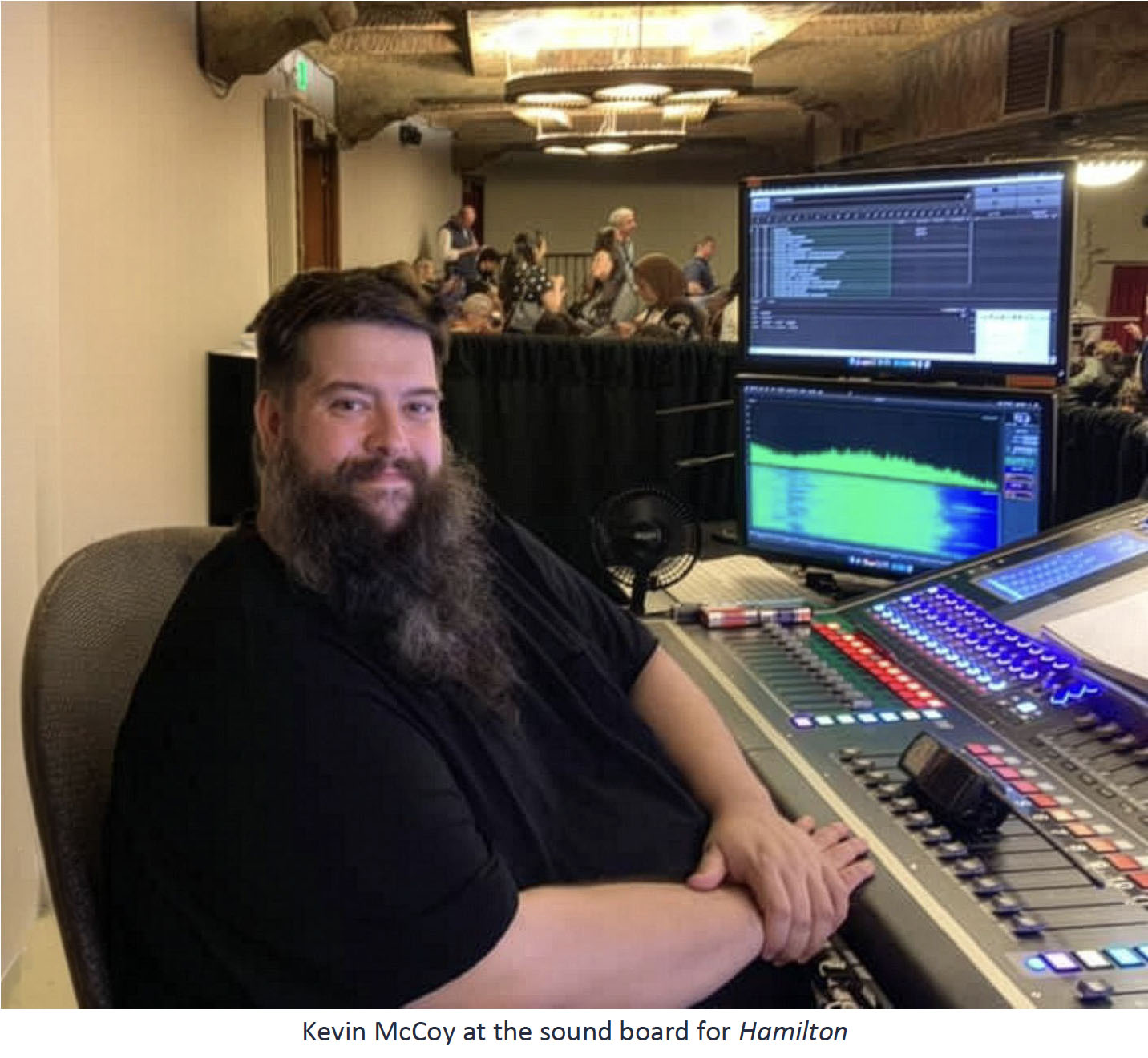
We couldn’t create this extensive volume of media without a projection designer, and we just happened to have one in Grand Rapids with extensive theater experience, Kevin McCoy. Kevin edits and creates media for the Theater Arts productions. We purchase a digital package of scenery, but there is almost always a projection or two that doesn’t quite work. In Wizard of OZ Kevin created new projections for the end of Act I, including the poppy field, snow falling, and then revealing the Emerald City.
Kevin’s history at the Reif Center exceeds even mine! When I started in 1996 he was a freshman and already working at the Reif Center, as students were running the place at the time! I like to claim I taught him everything I know, but he would just sit down with the manual for the light or sound board and work it all out. After school, he freelanced in theatre in Minneapolis before hitting the road. Kevin toured for more than twenty years, from kids shows like Bear in the Big Blue House Live and Sesame Street Live, through national tours of Broadway shows such as Mamma Mia, Motown, and Hamilton. He also showed Adam Savage how mixing Hamilton works in a video for the YouTube channel “Tested.” Kevin recently returned home to Grand Rapids, and we put his expertise to use at the Reif Center!
Life is an Open Book Projection Design
Kevin and I began working with the choreographers much earlier than I usually do for lighting. I don’t usually find out what is needed for lighting until tech week!
Kevin worked with each choreographer to find ideas and images for each book they were choreographing. There was a lot of back and forth as Kevin would get their ideas, create a projection, let them review it, make changes, etc., until a final projection was completed and approved.
I don’t know how Kevin does it. I just call it “Kevin Magic.” Does it seem like the designer for your Wizard of OZ projections hadn’t read the script? “Kevin Magic” can fix it!
“Working on this project has been a lot of fun and it’s let me explore a bunch of different ideas and techniques,” Kevin said. “First and foremost, I’ve tried to be a technical resource to translate what the choreographers want as a backdrop into reality with the tools I have available. For some scenes that meant some straightforward edits to an image that was provided, and for others it was a matter of interpreting some general ideas, getting inspiration from the book being represented, and coming up with an animation or image. John and I worked together to figure out how to blend the projections with lighting and scenic elements. Much of my work was done in the Adobe Creative Cloud software, especially After Effects for the animations, Photoshop to assemble collages, and Illustrator to trace some primary sources and stock images. I also used Blender for some of the mathematical pattern animations.
This has also been a delightful opportunity to work together with my sister Melanie, who is the Reif Center’s expert on QLab, which is the software used to set up a cue list of all the video and audio files for convenient, reliable playback.”
-Kevin McCoy
Here is a little history on the Adobe programs Kevin uses. I actually found it more interesting than I expected!
Adobe Photoshop
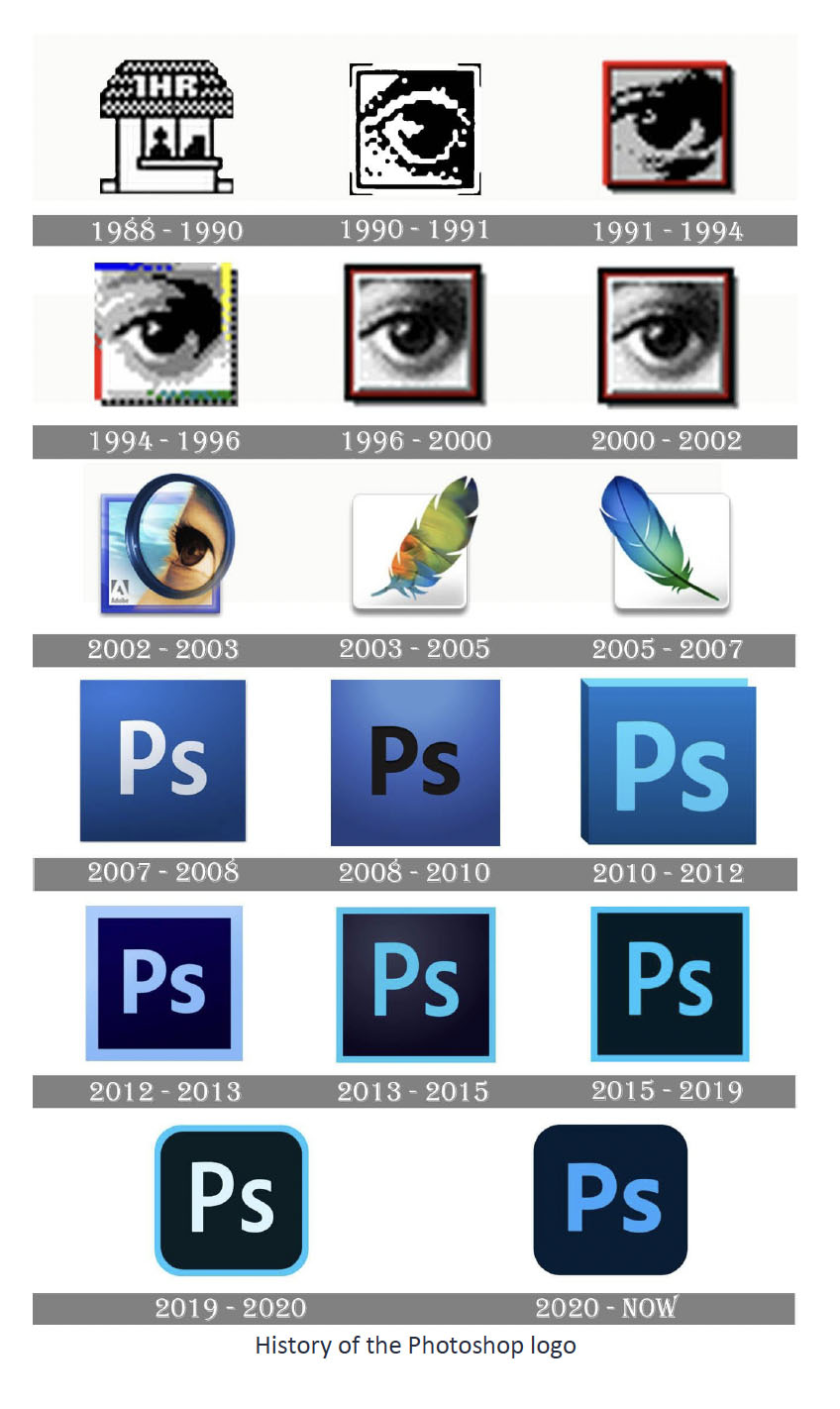
Photoshop was developed in 1987 by two brothers, Thomas and John Knoll, who sold the distribution license to Adobe Systems in 1988. Written on a Mac Plus (I had a Mac Plus in college I wish I had put it to better use!), it was only available on Macintosh until 1993. In 1995, Adobe purchased the rights for Photoshop from the two brothers for $34.5 million so Adobe would no longer have to pay them a royalty for each copy sold.
Adobe Illustrator
Development of Adobe Illustrator began in 1985. It serves as a companion piece to Adobe Photoshop where Photoshop is used for digital photo manipulation and computer illustration while Illustrator is used for typesetting and graphic design.
Adobe Premiere
Adobe Premier was developed for Apple in 1991 and Microsoft Windows in 1993. It was one of the first computer based non-linear editing systems, which means you can cut, rearrange and modify video files without altering the source material.
Adobe Audition
Originally developed by Syntrillium Software as Cool Edit Pro, it was acquired by Adobe for $16.5 million in 2003. Originally a simple audio editor, it is now a comprehensive digital audio workstation that is deeply integrated into Adobe Premier for video production.
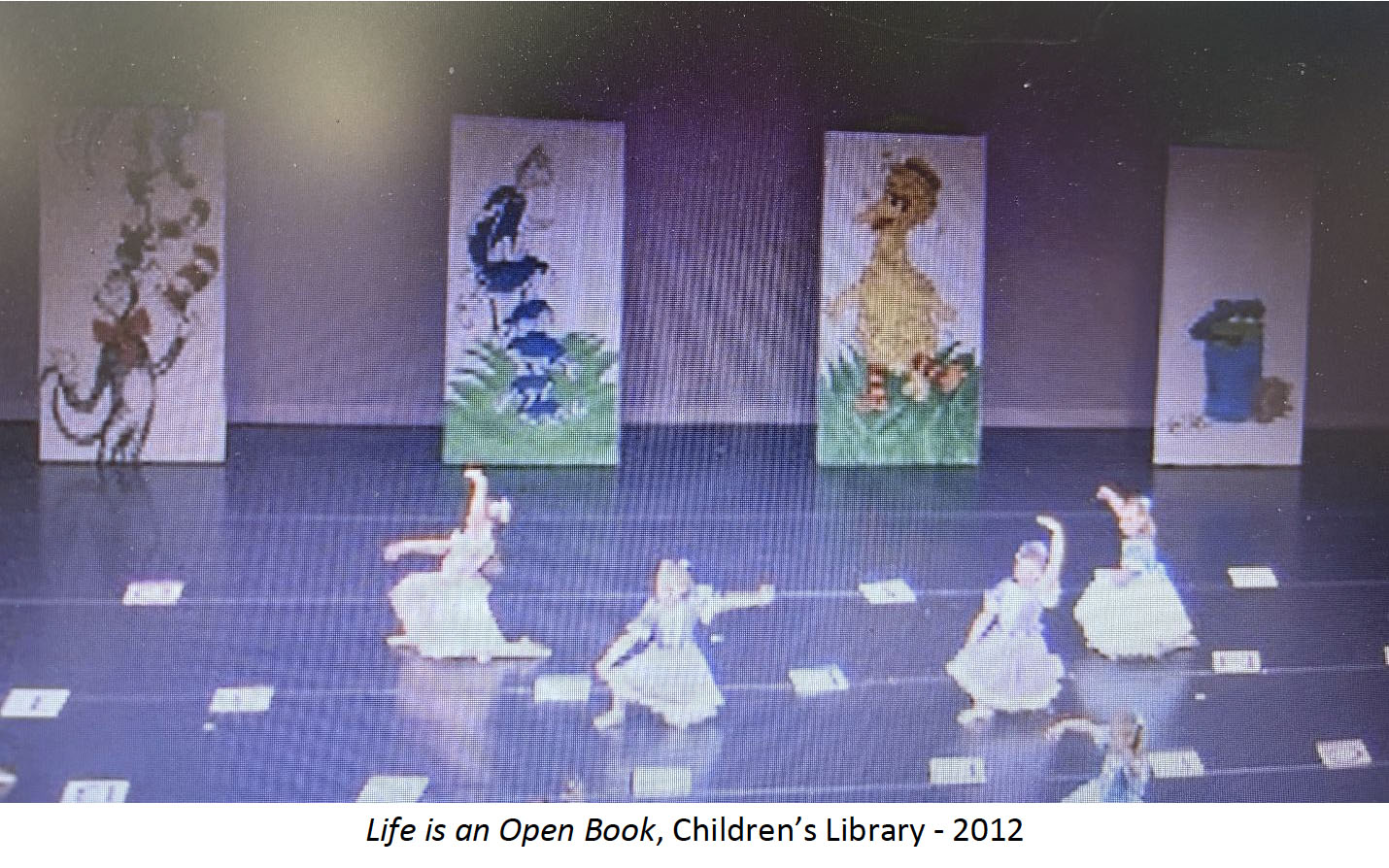
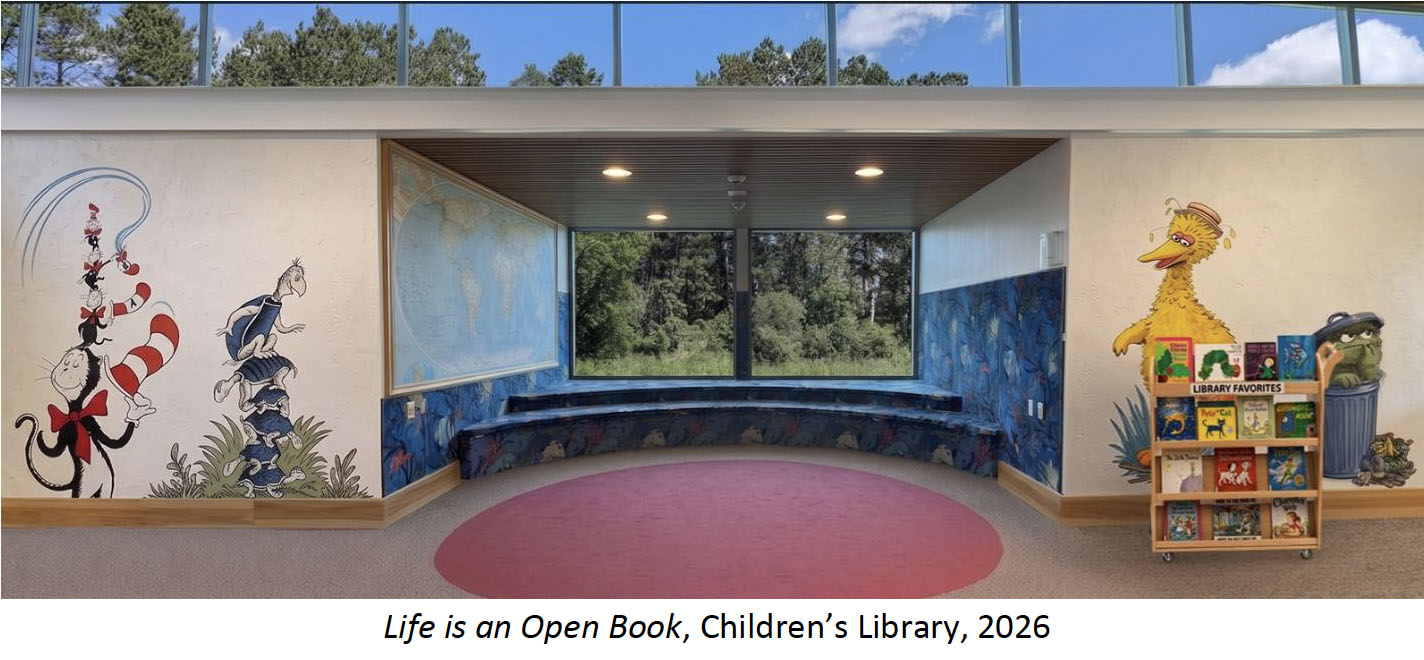
The best way to illustrate the change that Kevin has made for Life is an Open Book is by comparing the Children’s Library scene in each production.
In 2012 we used periaktoi, a 2500-year-old theatrical device in ancient Greek theater that is still used today. Periaktoi are three-sided set pieces with a different illustration on each side. Before we had fly space or a projector, we used these a lot!
This is Kevin’s projection for the Children’s Library scene. It captures the essence of the original scene and improves upon it!
The Reif Dance production of Life is an Open Book runs from June 12-14. I’m looking forward to it and hope to see you there!